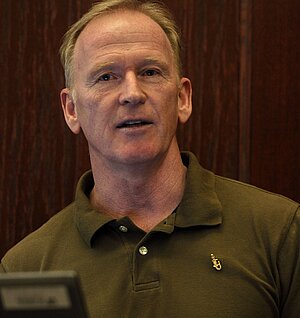
Mats Roslund
Keynote
Affiliation: Lund University
Abstract:
"Viking Age Romanticism and Contemporary Perspectives on the “Oriental” Connections"
Perspectives on the Viking Age tend to be coloured by prevailing ideological trends. Romanticism's idealisation of the male archetype has long been the subject of study and criticism. Another theme concerns the use of history during the Third Reich and in the context of White Supremacy. The Viking is portrayed there as Nordic pure, with manly strength and an expansive longing for freedom. It is therefore interesting to study how the ‘Viking’ as a multicultural messenger has emerged in contemporary historical and archaeological research as an opposing narrative. Particularly in contact with Islam, close interaction is emphasised, which is believed to have influenced the mental and material culture of the Nordic region. Scandinavians are portrayed as dynamically receptive, recipients of Islam's worldview and material culture, with rich common trade relations. However, if we look at the source material, a more varied picture emerges. The objects of ‘Oriental’ origin found in Scandinavia show a chronological and material variation that has been filtered through Eurasia, where contacts were maintained. In the analyses that are made, advocates of intense interaction tend to neglect previous research results, disregard methodological and theoretical perspectives on culture transfer, and simplify the dynamics that can be observed in the empirical sources. In my contribution, I attempt to refrain from contemporary demands for positive narratives and interpret the Scandinavians' relations with Islam through a high-resolution contextual analysis.
Biography: Mats Roslund is a professor of historical archaeology at Lund University. His research focuses on social formation processes such as social identity and the creation of communities, and their material expressions. Other areas include the social and cultural effects of trade, medieval urban life, slaves in late Viking Age society, and contacts with Slavic, Baltic-Finnish, Baltic and German-speaking peoples. Together with Professor Torbjörn Ahlström, he leads the investigations of the Iron Age centre of Uppåkra. He is editor-in-chief of the journal Fornvännen, published by the Royal Swedish Academy of Letters, History and Antiquities.